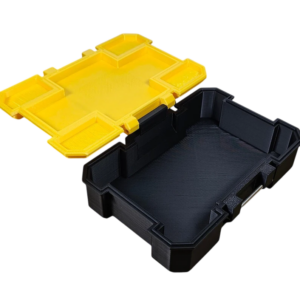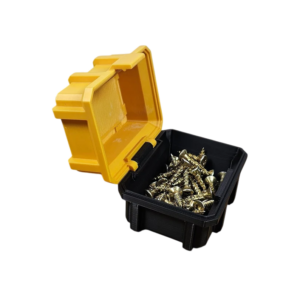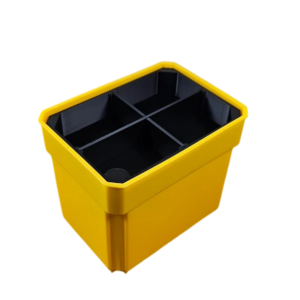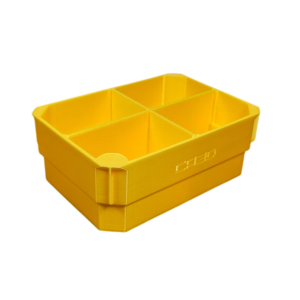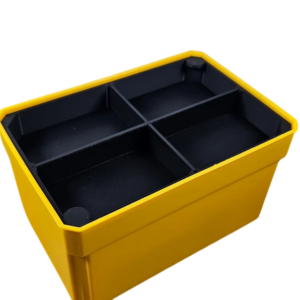
The DWST1-70706 is the two-drawer TSTAK unit that sits under an organiser case and pulls out for the small stuff. It is genuinely useful — right up to the point where a bin cracks, or you want a different split. This guide explains the bin layout, which bin goes where, and how to set the drawers up so you stop mixing M6 and M8.
What the unit actually is
It is a TSTAK drawer unit with two pull-out drawers, each holding a row of interchangeable plastic bins. The bins slide in from the front and can be lifted out individually. Because the unit is TSTAK, it stacks under an organiser case and clips to the rest of the range — it is not a ToughSystem unit and the parts do not cross over.
The bin positions
Each drawer is divided into positions, and the bin length depends on where it sits:
- Front left — the standard-size bin at the left-hand end of the drawer face.
- Front middle — the shorter bin that sits between the front bins.
- Rear / middle — the deeper bin that sits behind the front row.
Because the front, middle and rear bins are different shapes, a “set of 9” is not nine identical tubs — it is a mix that fills both drawers properly. That is why buying a single bin works best when you match it to the position you are replacing.
Full set or single bin?
Two honest cases for each:
- Buy the full set of 9 bins if the unit is second-hand and arrived empty, or if you want to re-plan both drawers at once.
- Buy a single bin if one has cracked, if you want a spare for a different job, or if you only use one drawer seriously and the other holds odds and ends.
Singles we stock: front left, front middle with dividers, middle, and a second front left variant for units built slightly differently.
Why people replace the bins
- The original split has cracked. Thin plastic bins split along the lip when the drawer is overloaded. Printed replacements are thicker in the wall.
- They want more dividers. A compartment you can split in two is a compartment that stops mixing sizes.
- They bought the unit empty. Common with second-hand units on marketplace sites.
- They want to colour-code. Black bins in a yellow unit make it easier to see what is missing.
Layout ideas by trade
Electrician: front row for wagos, screws and cable clips; rear for connectors and glands. Keep the most-used drawer as the top one.
Plumber: olives, washers and PTFE in front; compression fittings in the rear. A deeper rear bin takes a small coil of PTFE without spilling.
Mechanic or DIY: drill bits front, screws rear, sorted by size, with the most common length nearest the handle.
One drawer, one job: if you only need one drawer, leave the second empty rather than filling it with junk — it becomes the drawer you can repurpose when a job changes.
Fitting tips that save an evening
- Check the position before ordering. Front, middle and rear bins are different lengths; a front bin will not sit in the rear slot.
- Do not force a bin. If it will not slide home, it is the wrong position, not a tight fit.
- Keep weight out of the drawer. Drawers are for consumables and small parts, not for a socket set — heavy items belong in the case above.
- Label the front lip, not the lid of the unit. You will change the layout long before you change the unit.
Questions we get most
Are these bins the same size as the original DeWalt ones?
They are printed to fit the DWST1-70706 positions. If your unit is a different model, send a photo of the drawer face and we will confirm before you order.
Will the bins fit the ToughSystem drawer unit?
No. ToughSystem drawers are a different depth and take different bins.
Can I mix bin sizes in one drawer?
Yes, as long as each bin goes in the position it was shaped for — front, middle or rear.
See the full range: DWST1-70706 drawer unit bins.
ToolTrayPro is an independent UK maker. We are not affiliated with, endorsed by or sponsored by DeWalt or Stanley Black & Decker; brand and model names are used only to indicate compatibility.