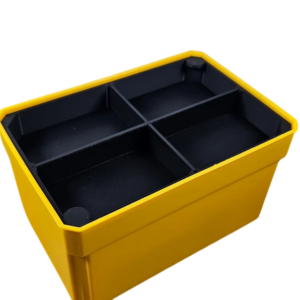
Most TSTAK cases arrive with a grid of small compartments and no real plan. Two weeks later the sockets are loose in the bottom and the screws have migrated into them. This is the layout we recommend to tradespeople who want to find a fixing without emptying the case onto the floor.
Start by emptying it completely
Every good layout starts with an empty case and everything on the bench. You cannot design around contents you have not looked at, and most people find three things they had forgotten they owned. Sort into five piles: fixings, sockets, spanners and pliers, power/consumables, and “does this live here at all?”
Sort by how often you reach for it
Frequency, not category, should decide what sits on top. A tray you open twenty times a day should never be under one you open once a week. Fixings usually win, which is why they belong at the top of the stack.
Layer 1 — fixings in a shallow tray
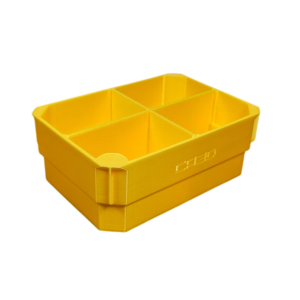
The shallow nesting tray with dividers is the workhorse. Split it by screw size rather than type — when you are on a ladder you know you need a 4×40, not “a woodscrew”. Keep pozi and flathead drivers in the same tray as the screws they fit.
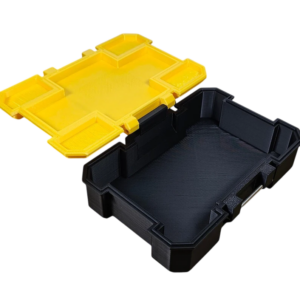
If the case rides on the passenger seat or in a van that corners hard, add the nesting cup lid. It is the cheapest fix for the “everything in one corner” problem.
Layer 2 — sockets in a medium tray
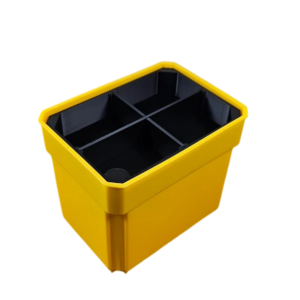
Sockets want to stand, not lie. A medium tray deep enough for a rail is the right home: sockets upright, sizes visible, and the rail lifts out in one movement when you need the whole set. Loose sockets in a compartment are a five-minute hunt; sockets on a rail are a five-second grab.
Layer 3 — spanners and pliers in a large tray
Long tools set the footprint of the case, so they go in the large tray at the bottom. Lay spanners flat and in size order, heads alternating so the stack stays level. Combination spanners and adjustables go together; pliers and cutters side by side.
Because the trays nest, the large tray on the bottom can carry the medium, which carries the shallow — three layers in one case, each liftable on its own.
Where the sliding tray earns its place
The sliding organiser tray is for the handful of things you want without opening anything: bits, a pencil, a knife, a tape. It works best at the top of the stack, where it slides out from under the lid.
Label the trays, not the case
Write on the tray edge, not the outside of the case — you will change the layout before you change the case. A paint pen or a strip of masking tape is enough. If two cases hold similar kit, colour-code one: a strip of tape on the handle tells them apart across a dark van floor.
The 20-minute layout, step by step
- Empty the case and sort into the five piles.
- Put the largest, least-used tools in the large tray.
- Sockets on a rail into the medium tray.
- Fixings into the shallow tray, split by size.
- Stack them: large at the bottom, medium, shallow on top.
- Lift each tray to check nothing fouls the lid.
- Label the tray edges, then load the case.
Three things that ruin a good layout
- Overfilling. A tray filled proud of its rim bows when the lid shuts, and the dividers stop gripping. Leave a few millimetres.
- Mixing metric and imperial in one compartment. You will always grab the wrong one under pressure.
- Storing the case on its side without lids. Small parts migrate. Either stand the case upright or use the lid.
Where the loose stuff goes
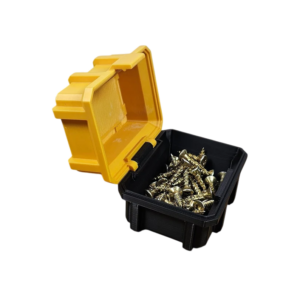
Not everything belongs in a tray. Boxes of 100 screws, spare blades and pencils live better in a small parts storage box that sits beside the case rather than in it. Keep the trays for what you use, and the boxes for what you restock from.
Questions we get most
How many trays fit in one TSTAK case?
Three nested — a shallow inside a medium inside a large — or two plus a sliding tray on top. Depth of your case decides the exact stack, so test the stack before you fill it.
Will a socket rail fit standing up?
A standard rail fits in the medium tray. Very deep rails for large socket sets are better in the large tray.
Can I wash the trays?
Yes — wipe with a damp cloth or rinse. They are printed plastic with no fabric or foam to soak.
Starting from scratch? Begin with the TSTAK tray range and add a second tray once you know what you reach for most.
ToolTrayPro is an independent UK maker. We are not affiliated with, endorsed by or sponsored by DeWalt or Stanley Black & Decker; brand and model names are used only to indicate compatibility.